
Wheelie King: Bike Stunt
Arts TeamRacing
0.00.00 Reviews
- Version
- 1.10
- Installs
- 10.00K
- Age Rating
- Everyone
Screenshots
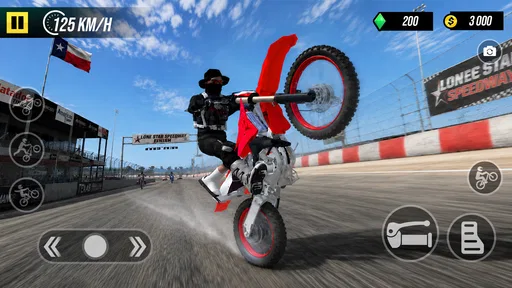
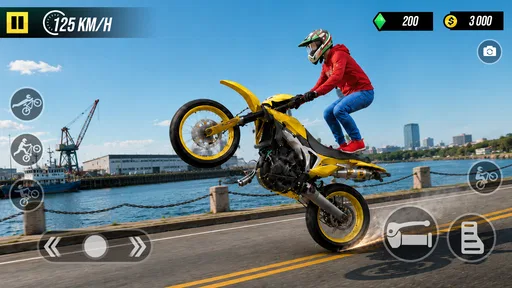
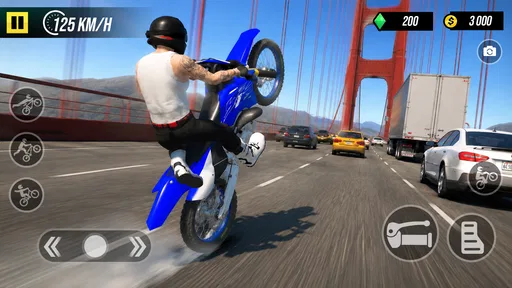
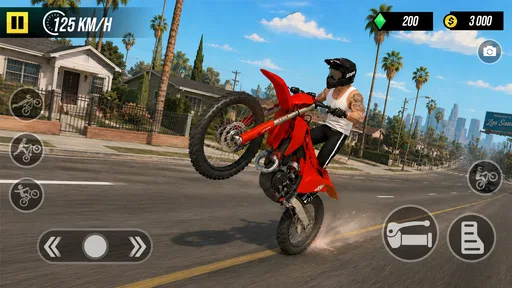
Our Review of Wheelie King: Bike Stunt
 Analysis by Appyee
I tried Wheelie King: Bike Stunt as a quick, focused racing game rather than a full motorcycle simulator, and that distinction matters. Its appeal is easy to understand: keep the front wheel raised, control the bike through stunts, and chase the satisfying moment when a clean run lasts longer than the previous one. It is free to play, made by Arts Team, and aimed at Everyone, so it is approachable for younger players and for anyone who wants a simple game to pick up without a long tutorial.
The current release is version 1.10, and the game requires Android 8.0 or later. It was released on July 14, 2026, and has passed the ten-thousand-install mark. Those details place it in the small, focused end of mobile racing rather than alongside the huge, content-heavy motorcycle franchises. I would recommend it most readily to players who enjoy short attempts, repeated practice, and the small satisfaction of improving control. I would not choose it for someone looking for a broad career mode, a large vehicle collection, or a realistic racing championship.
How the current version feels to play
The central challenge is balance. A wheelie looks simple when viewed as a single action, but keeping the bike at a useful angle turns the game into a test of timing and restraint. I found that the best approach was not to hold the control constantly. Small corrections are more reliable than dramatic movements, especially once the front end starts rising faster than expected.
That makes the game feel closer to a precision arcade challenge than a conventional race. In a traditional racing title, I usually think about braking points, overtaking lines, and the fastest route around a circuit. Here, my attention stays on the bike’s posture and on deciding when to continue pushing or settle the front wheel. The result is a more concentrated kind of play, with each attempt built around control rather than traffic or competition.
The store presents it as a game about realistic wheelies and bike stunts, but I would treat “realistic” as a description of the skill being imitated, not as a promise of a complete riding simulation. The fun comes from managing the stunt, not from recreating every part of motorcycle ownership. That is a useful expectation to set before downloading it.
For me, the strongest use case is a short break. If I have a few minutes while waiting for an appointment or taking a pause from work, I can start an attempt immediately and focus on one goal: keeping the bike controlled for longer than before. It does not demand the same commitment as a large racing game, and that makes its narrow design feel practical rather than incomplete in every situation.
The control lesson that makes the biggest difference
New players may be tempted to chase a spectacular stunt immediately, but I had better results by treating the first attempts as calibration. I watched how quickly the bike reacted, learned how much correction was needed near the balance point, and only then tried to extend the wheelie. This is one of the game’s less obvious strengths: improvement comes from reading the motion, not simply from pressing harder.
A useful routine is to divide each run into three stages. First, lift the front wheel gradually instead of trying to reach the most dramatic angle at once. Second, make the smallest correction needed to avoid tipping. Third, decide whether the current position is stable enough for another adjustment. That rhythm is more dependable than reacting emotionally when the bike begins to lean.
I also found that chasing a personal best can make me overcorrect. When a run is going well, the instinct is to keep changing the input because the bike feels close to losing balance. In practice, patience is often the better move. The game rewards controlled decisions more than frantic ones. That insight is easy to miss if every attempt is treated as a race against the clock or against an imagined opponent.
What version 1.10 means for returning players
Version 1.10 is the release I would use when assessing the game today. It gives existing players a clear point of reference, but the version number alone does not turn the experience into a different genre. The core identity remains a compact stunt-focused racing game, so returning users should expect refinement within that idea rather than a complete reinvention.
That matters because players often interpret a newer version as a reason to expect a large expansion. I would be more cautious here. The confirmed release information establishes the current version, while the most sensible way to judge the update is by how well the basic wheelie challenge holds attention. If you already enjoy short balance-based attempts, the current build is the one to revisit. If you disliked that central loop, a version change is unlikely to solve the fundamental mismatch.
For a new player, the practical benefit is simpler: starting with the current build avoids learning an older control feel and then having to adjust later. I would install it, spend several attempts learning the bike’s response, and decide based on that first-hand feel rather than on the promise of stunts alone.
The game’s modest scale is also part of its present character. With more than ten thousand installs, it is not positioned like a mainstream racing platform with a massive community surrounding it. That can be positive if you prefer a less intimidating game, but it also means I would not approach it expecting the social energy, constant events, or extensive competitive ecosystem commonly associated with larger racing releases.
Where it fits beside other racing games
Compared with a conventional motorcycle racer, Wheelie King: Bike Stunt is much narrower and more immediately understandable. A traditional alternative is better if you want several race types, varied tracks, overtaking, or a sense of progression across a season. Those games can provide more long-term variety, but they also tend to require more time and attention before the interesting parts open up.
Compared with stunt games that emphasize spectacle, this one appeals to a different instinct. I would choose it when I want to improve a specific action through repetition, not when I want a cinematic sequence of jumps and crashes. The trade-off is clear: the focused design makes the first session accessible, but it can also make the experience feel repetitive if balancing a wheelie is not enough to hold your interest.
It is also a better fit than a detailed simulator for casual players who do not want to manage a large set of technical systems. On the other hand, simulation fans may find the simplified focus too limited. If your enjoyment comes from tuning a motorcycle, studying realistic handling, or competing through structured races, another title in the racing category will probably serve you better.
Everyday play, learning curve, and age suitability
I can imagine using this game in a very ordinary scenario: I have a short wait, do not want to start a story-driven game, and want something that can be understood within moments. I begin with a cautious wheelie, lose balance, try again, and gradually find a more comfortable rhythm. That loop works because failure is immediate and the next attempt is easy to start.
The Everyone content rating also supports that casual role. Parents looking for a simple racing-themed game may find the premise easier to understand than a title built around combat or mature themes. Still, an age rating does not guarantee that every child will find the controls easy. Younger players may enjoy the stunt idea but become frustrated if they expect the bike to stay balanced without careful input.
I would introduce it by encouraging short practice sessions rather than demanding a long score chase. Five focused attempts can teach more than a long, impatient session. This is another practical tip that improves the experience: stop after a frustrating run and return later. Because the game’s challenge depends on fine timing, tired or impatient play can make the controls seem worse than they are.
The game is free, which removes the biggest barrier to trying it. That makes experimentation straightforward: install it, test the controls, and keep it only if the balance challenge feels satisfying. Free access is especially useful here because the appeal is very personal. Some players will enjoy repeating one precise stunt, while others will know quickly that they need more variety.
Limitations I noticed before recommending it
The main limitation is the same feature that gives the game its identity: its concentrated focus. Wheelies and stunts can be engaging, but they do not automatically provide the variety of a complete racing package. If you need races against opponents, a broad collection of motorcycles, or a structured sense of advancement, I would not make this my first recommendation.
There is also a risk of confusing visual excitement with mechanical depth. A stunt can look impressive, yet the long-term question is whether controlling it remains interesting after the novelty fades. My answer is that the game works best when approached as a practice challenge. It is less convincing as a replacement for a full motorcycle racing game.
Another point is the learning curve. The basic idea is friendly, but precision takes time. A player who expects instant success may read every failed attempt as a control problem. I found it more useful to treat mistakes as information: was the lift too aggressive, was the correction too late, or did I continue adjusting after the bike was already stable? That mindset makes the narrow design more rewarding.
Finally, the small install footprint implied by its modest audience can be a strength for discoverability but a weakness for people who want a highly active game community. I would choose it for personal practice, not for the feeling of joining a major racing scene. That distinction should guide expectations before installation.
Who should download it now
I would point this game toward someone who likes arcade racing, stunt challenges, and repeated attempts with a clear mechanical goal. It is particularly suitable for players who enjoy learning a control pattern and gradually becoming more consistent. The free price and Everyone rating make trying it easy, while the Android 8.0 requirement keeps it available to many reasonably recent devices.
I would also recommend it to a player who wants a low-commitment game that can fill short gaps in the day. It does not need the same emotional investment as a long campaign, and its central action is understandable without a complicated explanation. The best experience comes from setting a small target, such as holding a clean wheelie more confidently, rather than expecting a complete racing adventure.
I would skip it if your priority is realism in the broad simulator sense. I would also skip it if you become bored when a game asks you to repeat one mechanic for improvement. A full racing title is a better choice for varied courses and competition, while a larger stunt game may be preferable if you want constant visual spectacle. Wheelie King: Bike Stunt earns its place by being focused, not by trying to cover every possibility.
What I would watch as the game develops
The most important thing to watch is whether future development deepens the central stunt without losing its approachable feel. New layers would be valuable only if they give the wheelie challenge more meaning rather than distracting from it. For example, any added progression would need to support practice and control instead of turning a clean, simple idea into a cluttered menu experience.
I would also pay attention to how well the current version serves both beginners and experienced players. Beginners need controls that are understandable and forgiving enough to learn, while returning players need reasons to keep refining their technique. That balance is difficult in a precision game: too much assistance removes the challenge, but too little guidance can make the first session feel unfair.
My advice is to judge the game through a short personal test. Install the current version, try several attempts without chasing an extreme result, and ask whether the act of correcting the bike feels satisfying. Then try the same challenge again later. If you notice yourself thinking about timing and balance between sessions, the focused design is working for you. If you are already wishing for tracks, rivals, upgrades, or a larger motorcycle roster, you have probably found the boundary of its appeal.
Overall, I see Wheelie King: Bike Stunt as a straightforward free racing game with a clear personality. Arts Team has built its appeal around the feel of maintaining a stunt, and that can be surprisingly engaging when approached patiently. It is not the right substitute for a feature-rich motorcycle racer, but it does not need to be. Choose it for focused wheelie practice, quick sessions, and gradual control improvement—not for a complete racing career.
After spending time with it, I would recommend giving it a fair trial if the idea of mastering balance sounds enjoyable. Start gently, use small corrections, and let the current version show you whether repetition feels rewarding. For the right player, that simple loop is enough to make a short break entertaining; for everyone else, the limitations will become clear just as quickly.
Verdict
Strengths of Wheelie King: Bike Stunt
- Simple controls make it easy to start performing wheelies.
- Short stunt challenges are suitable for quick gaming sessions.
- Bike upgrades add a sense of progression over time.
- Bright visuals and effects make crashes entertaining.
- Works well for players who enjoy casual physics-based games.
Limitations of Wheelie King: Bike Stunt
- Physics can feel inconsistent during landings and sharp movements.
- Repeated tracks may make the gameplay feel predictable.
- Progress may slow down without frequent upgrades.
- Ads can interrupt play between attempts or challenges.
- Limited customization reduces variety for long-term players.
Similar Picks in This Category
View All
Hill Climb Racing
Fingersoft4.3

Dr. Driving
SUD Inc.4.2

Traffic Rider
skgames4.5

Asphalt 8 - Car Racing Game
Gameloft SE4.6

Race Master 3D: Car Racing
Beresnev Games4.6

Extreme Car Driving Simulator
AxesInMotion Racing4.3
Frequently Asked Questions
What is Wheelie King: Bike Stunt?
Wheelie King: Bike Stunt is an arcade-style motorcycle game focused on performing long wheelies, balancing your bike, and completing stunt challenges. After trying it, the main appeal is its simple one-touch-style control system combined with progressively more difficult tracks. Players can ride through different environments, collect rewards, and aim for higher scores by maintaining balance without crashing.
How do you play Wheelie King: Bike Stunt?
The gameplay is easy to understand, but mastering it takes practice. You control the motorcycle’s movement and try to keep the front wheel raised while avoiding obstacles, ramps, uneven surfaces, and sudden changes in the track. Small adjustments are usually more effective than holding the control continuously. Timing is especially important when landing jumps or approaching narrow stunt sections.
Can Wheelie King: Bike Stunt be played offline?
Wheelie King: Bike Stunt may allow you to play its main riding and stunt levels without a constant internet connection, which makes it suitable for short sessions while traveling or when mobile data is unavailable. However, some features may still require connectivity, including advertisements, online rewards, updates, or promotional content. It is best to launch the game once while connected before playing offline.
Is Wheelie King: Bike Stunt free to download and play?
The game is generally available as a free download, allowing players to access its core motorcycle stunt gameplay without paying upfront. Like many free mobile games, it may include advertisements and optional in-app purchases for coins, upgrades, bikes, or other bonuses. You can usually progress through regular play, although purchases may speed up progression or reduce waiting.
Is Wheelie King: Bike Stunt suitable for children and casual players?
Wheelie King: Bike Stunt is relatively easy for casual players to start because its objective is immediately clear and the controls are not complicated. Younger players may also enjoy the colorful stunt-focused presentation, but parents should check the store rating and advertising content for their region. Repeated crashes and increasingly demanding levels can make the game challenging, so patience is helpful.
Play our best games!


